
 TiMi AI
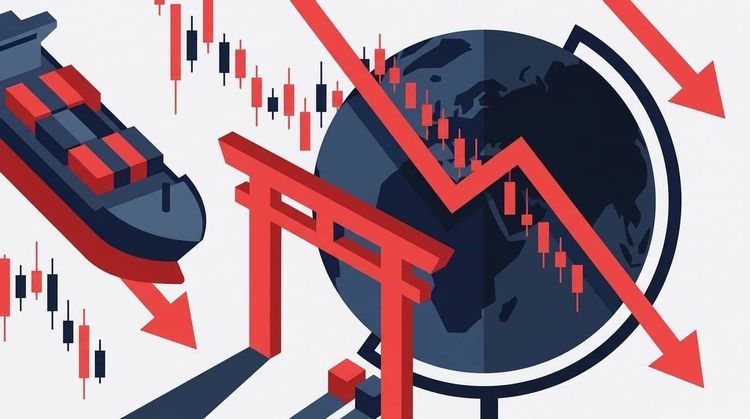
Fire in the Gulf: The Strait Goes Dark
The weekend of July 11–12 delivered a seismic shock to global energy markets. Following an attack on a commercial vessel, the US military launched extensive air and maritime strikes against Iranian military targets. Iran responded with drone and missile salvos across the region and declared the Strait of Hormuz closed. Shipping transit through the chokepoint has since slowed to its lowest level in five weeks — a development that sent immediate and violent ripples through commodity and equity markets alike.
Brent crude surged to $79.50 a barrel while WTI climbed to $74.50 a barrel, with both benchmarks posting a gain of 4.3% on the session — a move that underscores just how acutely markets price the Strait's role in global supply logistics. The flip side of that energy spike was a sharp deterioration in risk appetite. S&P 500 futures fell 1.0%, Dow futures slipped 0.4%, and Nasdaq futures declined 0.3%. Asian equity markets bore the brunt of the overnight session: the Nikkei 225 dropped 1.1%, the Kospi shed 5.6%, and SK Hynix — a bellwether for regional tech sentiment — tumbled 10.6%.
For European traders arriving at their desks this morning, the setup is unambiguous: energy is the bid, equities are the offer, and the geopolitical premium in crude is far from fully priced if the closure persists.
A Crowded Week of Catalysts Amplifies the Hormuz Shock
The Hormuz crisis does not exist in a vacuum. A cluster of high-impact scheduled events this week threatens to compound the volatility already injected into markets.
OPEC nations are convening today to assess energy markets — a meeting that has taken on sudden urgency given the Strait shutdown. Traders will be watching closely for any signal on whether the group intends to adjust output in response to the supply and shipping disruption in the Gulf. Any decision from that meeting is expected to feed directly back into Brent and WTI.
On the inflation front, US June CPI is scheduled for release on Tuesday. Headline inflation is expected to ease, partly reflecting lower retail gasoline prices, but core CPI is forecast to remain sticky at 2.9% year-over-year, with a month-over-month expectation of 0.3%. The headline figure carries a consensus expectation of 3.9% year-over-year. A reading that surprises to the upside on core would reinforce the case for a hawkish Federal Reserve pivot and likely boost the US dollar while adding further pressure to equity futures already under siege from the geopolitical backdrop.
That Fed narrative gets its next major test when Chairman Kevin Warsh delivers his debut semiannual Monetary Policy Report to Congress, also starting Tuesday. Markets are currently pricing a 70% probability of a hawkish outcome, and any language from Warsh that leans into rate-hike territory would be expected to drive the dollar sharply higher against major peers including sterling.
In Canada, the Bank of Canada is scheduled to announce its rate decision on Wednesday. Money markets are pricing a hold at 2.25% — which would mark the sixth consecutive pause — with that outcome assigned a 91% probability. The central bank faces a genuine policy dilemma: domestic economic growth contracted by 0.1% while energy-driven inflation, now freshly stoked by the Hormuz closure, is running at 6.8%. The Canadian dollar and USD/CAD will be sensitive to any deviation in guidance relative to the widening US rate gap.
Finally, away from the geopolitical and monetary storm, agricultural markets are rallying sharply after the USDA's July WASDE report delivered a bullish shock. The agency cut old-crop corn ending stocks to 1.790 billion bushels from a prior estimate of 2.020 billion bushels, trimmed old-crop soybean stocks to 330 million bushels, and reduced new-crop corn estimates to 1.960 billion bushels from 2.145 billion bushels. New-crop wheat stocks were pegged at 722 million bushels. Heat stress in the US Corn Belt and ongoing war-related export risks in the Black Sea are adding further upward pressure to the ags complex, which has now rallied 35% from recent lows.
Scenarios That Will Define the Week
The primary variable for crude and broader risk sentiment is the duration and severity of the Strait of Hormuz closure. If shipping transit remains suppressed or deteriorates further, the energy bid could extend meaningfully and equity futures may face additional downside. Conversely, any diplomatic signal that the Strait could reopen — or that alternative routing is being secured — would likely trigger a partial unwind of the geopolitical premium in crude.
The OPEC meeting today is the first scheduled catalyst to watch. A decision to adjust output — either to compensate for disrupted Gulf supply or to manage price levels — could either amplify or dampen the crude move. No outcome should be assumed ahead of the session.
Tuesday's US CPI print is the next major fork in the road. A core reading that comes in above the 0.3% month-over-month expectation would likely accelerate dollar strength and add a monetary tightening overlay to the existing geopolitical pressure on equities. A softer-than-expected print could offer some relief to risk assets, though the Hormuz backdrop may limit any sustained recovery.
Warsh's congressional testimony running concurrently with CPI creates the potential for a compounding effect. Watch for any explicit hawkish signals on the rate path — particularly if paired with a hot inflation print — as the combination could drive rapid dollar appreciation and a further leg lower in equity futures.
For commodity traders, the WASDE-driven grain rally warrants monitoring for follow-through, particularly if the Hormuz situation introduces additional uncertainty around global freight and logistics costs. The Bank of Canada decision on Wednesday will be the week's final major scheduled risk event, with USD/CAD the primary vehicle for expressing any divergence in rate expectations between Ottawa and Washington.
Risk Factors
- Headline gap risk: the Hormuz situation is evolving in real time and any escalation or de-escalation overnight could gap crude and equity futures sharply at the European open.
- Thin pre-open liquidity may exaggerate moves in Brent and WTI before the OPEC meeting outcome is known, creating adverse fill risk on directional positions.
- Event-day whipsaw risk is elevated with US CPI and Warsh testimony both landing Tuesday — a split signal between the two could produce violent intraday reversals across dollar pairs and equity futures.
- Geopolitical premium unwind: any credible diplomatic development that signals Strait reopening could trigger a rapid and disorderly reversal of the crude spike, catching leveraged long positions offside.
- Bank of Canada guidance divergence risk: if the BoC signals a more dovish path than markets expect given the energy inflation surge, USD/CAD could move sharply against consensus positioning.
- Correlation breakdown risk: the simultaneous spike in crude and sell-off in equities may not persist if energy-importing economies price in demand destruction, complicating cross-asset hedging strategies.
This article does not constitute financial advice. It is produced for informational purposes only and is intended for professional market participants. Trading involves significant risk of loss. Past market behaviour is not indicative of future results. Always conduct your own due diligence before making any trading or investment decision.

